
 Wildlife
of Spain
European Mink
Otters, Badgers & Mustelids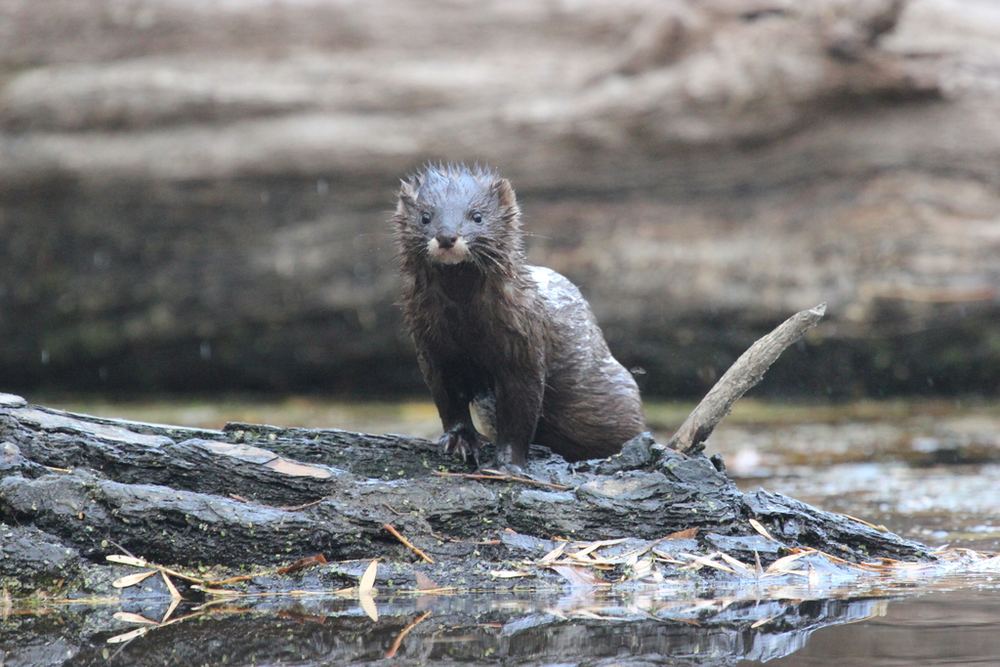
Photo: Алина Урусова, some rights reserved (CC BY) · CC-BY (May be cropped or resized)
Mustela lutreola
Basic stats
Diet
Voles, frogs, fish, crustaceans and insects
Habitat
Forest streams, rivers and lakes with densely vegetated banks
Range
Europe
Litter size
2–7, usually 4–5
Size
Body 373–430mm (males), 352–400mm (females); tail 153–190mm and 150–180mm
Weight
550–800g
The European mink is a semiaquatic mustelid native to Europe. It is similar in colour to the American mink but slightly smaller, with a less specialised skull, and it is more closely related to the European polecat. The body is elongated with short limbs and relatively well-developed webbing between the toes. The head is large and broad with short ears, and the tail is short, about 40% of body length. Males measure 373–430mm in body length and females 352–400mm, and weight is 550–800g (Wikipedia, general species account).
It lives along streams, rivers and lakes, rarely more than 100m from fresh water, and prefers densely vegetated banks. It is mainly nocturnal and crepuscular, and dens in crevices, among tree roots and bramble or in burrows. Home ranges average 32 hectares for males and 26 hectares for females. It feeds mainly on voles, frogs, fish, crustaceans and insects. Mating is in February and March, young are born in April and May, litters are two to seven, and eyes open after 30–36 days (GBIF description, Mustelidae; Wikipedia, general species account).
Quick answers
- What does the European Mink eat?
- Voles, frogs, fish, crustaceans and insects
- What habitat does the European Mink live in?
- Forest streams, rivers and lakes with densely vegetated banks
- Where is the European Mink found?
- Europe
- What is the litter size of the European Mink?
- 2–7, usually 4–5
- How big is the European Mink?
- Body 373–430mm (males), 352–400mm (females); tail 153–190mm and 150–180mm
- How much does the European Mink weigh?
- 550–800g