
 Wildlife
of Spain
Caspian Gull
Gulls, Terns, Skuas & Auks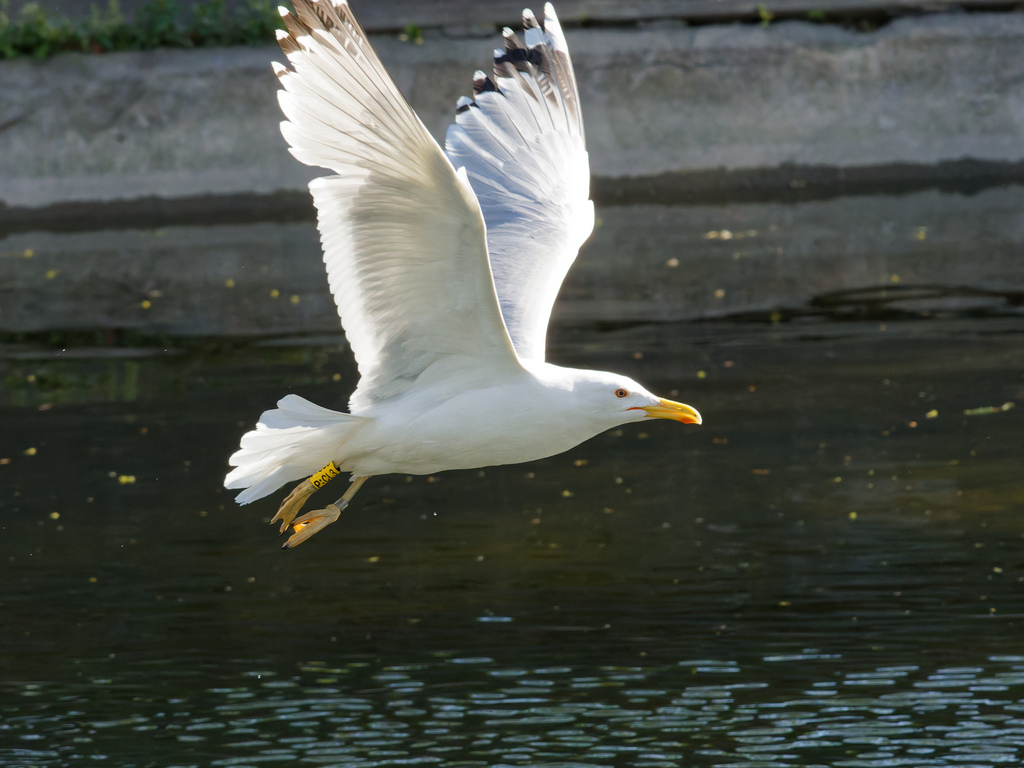
Photo: (c) Donald Davesne, some rights reserved (CC BY) · CC BY 4.0 (May be cropped or resized)
Larus cachinnans
Basic stats
Diet
Fish, invertebrates and small vertebrates
Habitat
Coasts, lakes, rivers, wetlands and human-modified areas
Range
Breeds from the Black and Caspian seas through Central Asia to northwestern China
Size
56–68cm
Wingspan
137–155cm
Weight
Averages about 1112g
The Caspian Gull is a large member of the herring-gull complex. Adults measure 56–68 cm from bill to tail, while their extended wings span 137–155 cm. It has a slender bill, sloping forehead, long legs, wings and neck, and often a small dark eye. AVONET records an average mass of about 1,112 g (Wikipedia, general species account; AVONET, Tobias et al. 2022).
It breeds from the Black and Caspian seas east through Central Asia to northwestern China, with some birds moving farther south seasonally in winter. Coasts and inland waters are both used, along with human-modified feeding areas. Fish lead its EltonTraits diet profile at 40%, invertebrates contribute 30% and endothermic vertebrates 20% (Wikipedia, general species account; EltonTraits, Wilman et al. 2014).
Quick answers
- What does the Caspian Gull eat?
- Fish, invertebrates and small vertebrates
- What habitat does the Caspian Gull live in?
- Coasts, lakes, rivers, wetlands and human-modified areas
- Where is the Caspian Gull found?
- Breeds from the Black and Caspian seas through Central Asia to northwestern China
- How big is the Caspian Gull?
- 56–68cm
- What is the wingspan of the Caspian Gull?
- 137–155cm
- How much does the Caspian Gull weigh?
- Averages about 1112g