
 Wildlife
of Spain
Iberian Lynx
Cats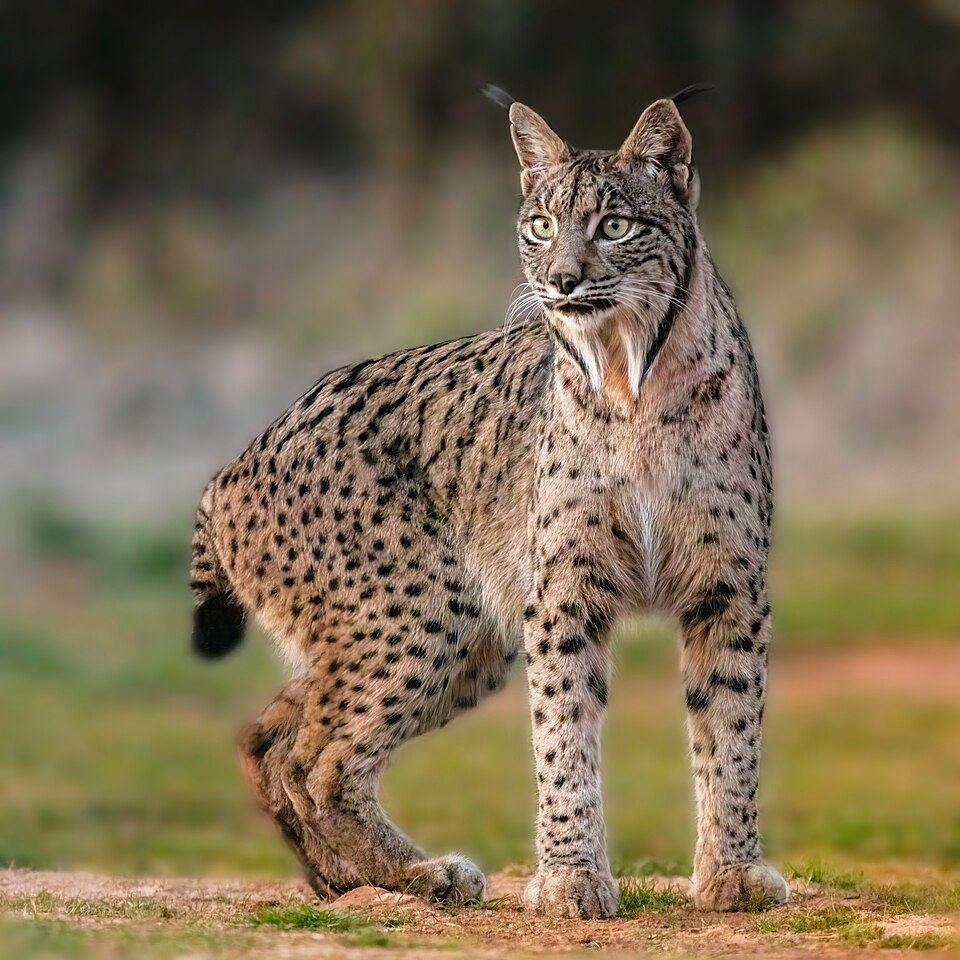
Photo: Diego Delso · CC BY-SA 4.0 (May be cropped or resized)
Lynx pardinus
Basic stats
Diet
Primarily European rabbits; also partridges, rodents and occasional young ungulates
Habitat
Mediterranean scrub, open woodland and dehesa with dense cover
Range
Iberian Peninsula
Litter size
Usually 2 kittens
Gestation period
About 63–73 days
Size
Head–body 68–82cm; tail 12.5–16cm
Weight
About 7–15.9kg
The Iberian lynx is a long-legged, short-tailed cat with a prominent facial ruff, black ear tufts and a tawny coat patterned with dark spots. Coat patterns vary from many small spots to fewer large marks. Females are generally smaller than males, and the combination of compact body, large feet and tufted face separates it from the larger Eurasian lynx.
It is endemic to the Iberian Peninsula and depends strongly on Mediterranean scrub and woodland mosaics that support European rabbits. Lynx are mainly solitary, marking stable territories and hunting chiefly around dusk and at night. Rabbits dominate the diet, although partridges, rodents and young deer are sometimes taken. Females usually give birth in spring after a gestation of roughly two months.
Quick answers
- What does the Iberian Lynx eat?
- Primarily European rabbits; also partridges, rodents and occasional young ungulates
- What habitat does the Iberian Lynx live in?
- Mediterranean scrub, open woodland and dehesa with dense cover
- Where is the Iberian Lynx found?
- Iberian Peninsula
- What is the litter size of the Iberian Lynx?
- Usually 2 kittens
- How long is the gestation period of the Iberian Lynx?
- About 63–73 days
- How big is the Iberian Lynx?
- Head–body 68–82cm; tail 12.5–16cm
- How much does the Iberian Lynx weigh?
- About 7–15.9kg