
 Wildlife
of Spain
Red Fox
Wolves, Foxes & Jackals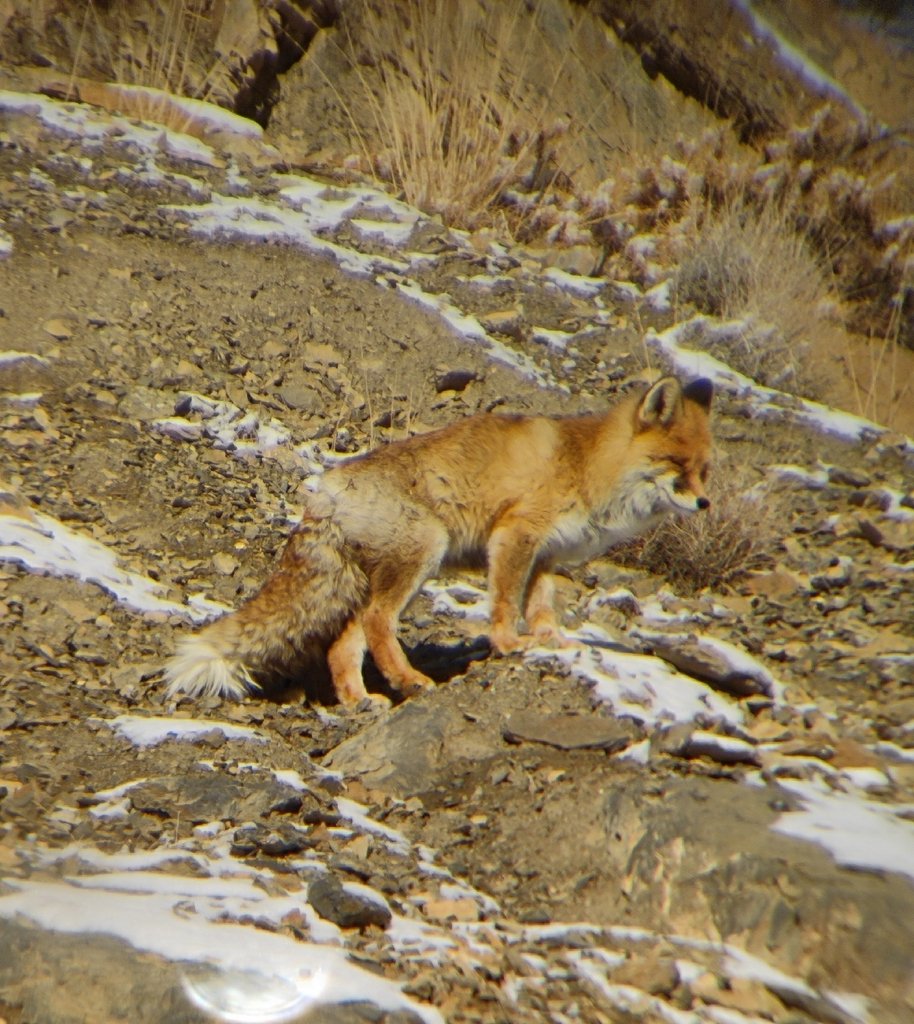
Photo: Surya · CC0
Vulpes vulpes
Basic stats
Diet
Small mammals, birds, reptiles, invertebrates, carrion, fruit, and other plant matter
Habitat
Highly adaptable across natural and human-modified landscapes
Range
Most of the Northern Hemisphere, including Mongolia
Litter size
5
Gestation period
52 days
Weight
4131.7g
The red fox is the largest of the true foxes, with a slender body, pointed muzzle, upright triangular ears, and a long bushy tail. The familiar coat is reddish above with paler underparts and darker lower legs, but the species also produces grey, blackish, and other colour forms. Its tail commonly carries a contrasting pale tip. Compared with the corsac fox, it is larger and generally longer-legged, though coat colour alone is unreliable because both species vary. The broad geographic range has produced substantial regional variation in size and appearance. (Wikipedia, general species account)
Red foxes are adaptable omnivores. Small rodents form important prey, supplemented by rabbits, squirrels, birds, reptiles, insects, carrion, fruit, seeds, and other vegetation. They usually forage alone, locating small prey by sound before making a high pounce, but often live as pairs or small family groups in which older young may help rear a later litter. The species occurs across most of Eurasia and the rest of the Northern Hemisphere. The source opened for this batch supports general biology but does not specify Mongolian habitats or a dependable viewing location. (Wikipedia, general species account)
Where to see Red Fox in Spain
GBIF records grouped by protected area. They show where the species has been reported, not that it is there now, and they are not population counts.
Recorded in 11 protected areas (2012–2026). The 8 with the most records:
- els Carrissars d'Elx: 224 records (2020–2021)
- Parque Natural del Alto Najerilla: 175 records (2024–2025)
- ZEC-ZEPA Alto Tajo: 28 records (2024–2025)
- ZEPA Carrizales y Sotos de Aranjuez: 17 records (2022–2026)
- Espai d'interès natural de les Gavarres: 12 records (2022–2025)
- Parc Agrari del Baix Llobregat: 12 records (2022–2024)
- Monfragüe National Park: 6 records (2012–2025)
- Meatzaldeko biotopo babestua: 5 records (2018)
Quick answers
- What does the Red Fox eat?
- Small mammals, birds, reptiles, invertebrates, carrion, fruit, and other plant matter
- What habitat does the Red Fox live in?
- Highly adaptable across natural and human-modified landscapes
- Where is the Red Fox found?
- Most of the Northern Hemisphere, including Mongolia
- What is the litter size of the Red Fox?
- 5
- How long is the gestation period of the Red Fox?
- 52 days
- How much does the Red Fox weigh?
- 4131.7g